
Is Caprylic/Capric Triglyceride the Ultimate Moisturizer for Sensitive Skin?
What Exactly Is Caprylic/Capric Triglyceride?
| Caprylic/Capric Triglyceride, often referred to as a type of medium-chain triglyceride (MCT), is a synthetic ester formed by the reaction of Glycerin with two medium-chain fatty acids: caprylic acid (C8) and capric acid (C10). Its primary commercial sources are coconut oil (accounting for approximately 70% of raw materials) and palm kernel oil (25%), with the final product obtained through hydrolysis, fractionation, and esterification processes to achieve a purity of over 99%. Physically, it appears as a colorless to pale yellow transparent oily liquid with a viscosity of 25-35 mPa·s at 25℃, a texture that sets it apart from heavier oils and synthetic emollients. Chemically, its structure—featuring three ester bonds per molecule and a balanced ratio of C8 (65-80%) to C10 (20-35%) fatty acids—gives it unique functional properties. Unlike long-chain triglycerides, its smaller molecular weight allows it to penetrate the stratum corneum without clogging pores, while its branched structure mimics the skin' s natural lipids, supporting barrier function. This combination of natural derivation and tailored chemistry makes it a staple in modern skincare formulations. |  |
The Top Pain Points of Moisturizers for Sensitive Skin (And HowCaprylic/Capric Triglyceride Solves Them)
Sensitive skin requires formulations that avoid irritation, maintain hydration, and feel comfortable—yet many products fall short. Below are the most common market pain points, paired with how Caprylic/Capric Triglyceride addresses each challenge.
Pain Point 1: Irritation and Sensitization From Harsh Ingredients
Many moisturizers rely on synthetic emollients, fragrances, or preservatives that disrupt the skin' s barrier, triggering redness, itching, or contact dermatitis. A 2022 study in Contact Dermatitis noted that even seemingly gentle ingredients can cause reactions in reactive skin . However, Caprylic/Capric Triglyceride has an exceptional safety profile.
The Cosmetic Ingredient Review (CIR) rated it as safe for use at concentrations up to 100%, with a comedogenic rating of 0-1 and a Draize eye irritation score of 0.3/110. The European Scientific Committee on Consumer Safety (SCCS) also endorses its safety for use in products for children and pregnant individuals. Its low impurity level minimizes potential irritation, making it suitable for even the most reactive complexions.
Pain Point 2: Greasy Texture and Pore Clogging
Dry sensitive skin needs hydration, but heavy oils (such as mineral oil) often leave a greasy residue and can clog pores, worsening breakouts or congestion. This creates a dilemma: choose hydration or comfort. Caprylic/Capric Triglyceride resolves this by offering lightweight moisture.
Its molecular structure allows it to spread easily across the skin, forming a breathable protective film without heaviness. As a texture modifier, it reduces formula viscosity in a concentration-dependent manner, improving spreadability while eliminating greasiness. Unlike mineral oil, it does not accumulate in pores or promote the growth of Cutibacterium acnes, making it compatible with both dry and acne-prone sensitive skin.
Pain Point 3: Poor Hydration Longevity and Barrier Damage
Sensitive skin often has a compromised lipid barrier, leading to transdermal water loss (TEWL) and persistent dryness. Many moisturizers only provide temporary hydration, failing to repair the underlying barrier. Caprylic/Capric Triglyceride targets both immediate and long-term hydration needs.
In vitro studies show that it reduces TEWL by 25-40% by filling gaps in the stratum corneum' s lipid matrix via van der Waals forces, mimicking the skin' s natural lipid structure. A 2023 study in Life (Basel) confirmed that an emollient emulsion containing 15.0% Caprylic/Capric Triglyceride significantly increased superficial skin hydration and reduced TEWL in vivo, thanks to its occlusive properties that support barrier repair. It also enhances the penetration of other barrier-supporting ingredients, such as ceramides, amplifying overall formula efficacy.
Pain Point 4: Inconsistent Formula Stability and Active Ingredient Efficacy
Sensitive skin formulations often include fragile active ingredients that degrade easily or fail to penetrate the skin. Caprylic/Capric Triglyceride acts as a stable carrier and solvent, solving both issues.
As a solvent, it effectively dissolves oil-soluble actives, ensuring uniform distribution in formulations. In vitro diffusion experiments demonstrate that it increases the transdermal absorption of active ingredients by 2-3 times, enhancing their bioavailability.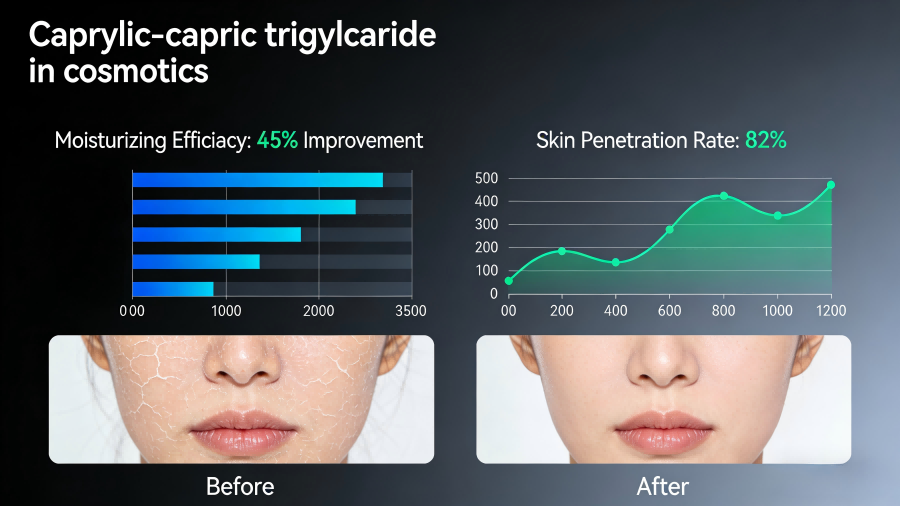
Key Advantages of Caprylic/Capric Triglyceride in Skincare
Beyond solving common pain points, Caprylic/Capric Triglyceride offers a suite of advantages that make it indispensable in sensitive skin formulations:
Multifunctional Performance: It acts as an emollient, solvent, texture modifier, and barrier enhancer—reducing the need for multiple ingredients and minimizing formulation complexity.
Broad Compatibility: It pairs well with silicones to reduce stickiness, antioxidants, and barrier lipids like ceramides. It is incompatible only with high-ionic-strength systems and strong oxidizers.
Clean Beauty Alignment: It meets Clean Beauty standards, as it is derived from natural sources and free of controversial additives. Over 98% of products containing it highlight its "coconut oil derivative" status to appeal to clean beauty consumers.
Proven Long-Term Safety: With 30 years of safe application history and comprehensive toxicological data, it is a trusted ingredient for brands targeting sensitive skin.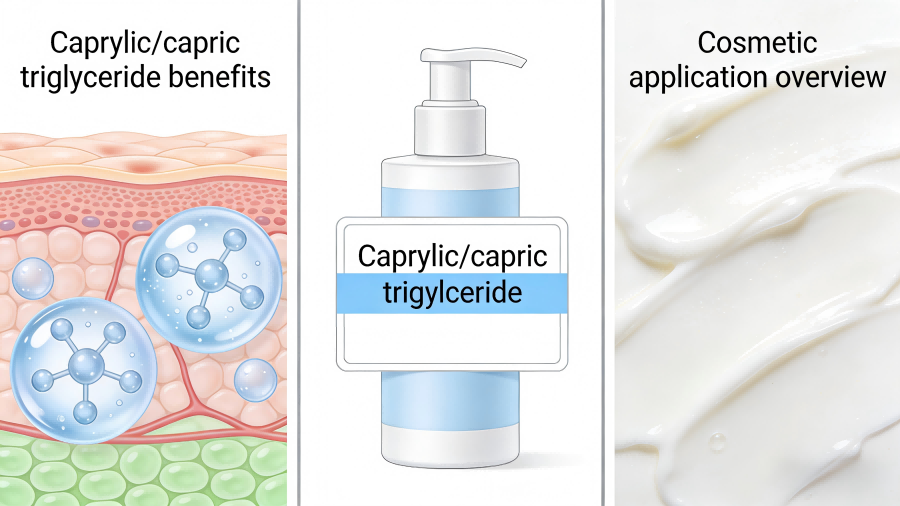
Applications in Cosmetics: From Moisturizers to Sun Care
Caprylic/Capric Triglyceride' s versatility makes it a fixture in numerous cosmetic categories, particularly those tailored to sensitive skin. Its recommended concentration varies by product type :
Moisturizers and Emulsions: Used at 5-25% to deliver lightweight hydration and barrier support. Formulations with 15% concentration have been shown to improve stratum corneum health and reduce TEWL.
Sunscreen Products: Added at 10-50% to dissolve oil-soluble UV filters, improving formula stability and spreadability without irritating sensitive skin.
Cosmetics: A core ingredient in lipsticks and foundations (3-15%) to enhance texture, reduce caking, and provide subtle hydration.
Cleansers and Makeup Removers: Used at 30-90% in oil-based cleansers to dissolve makeup and impurities gently, without stripping the skin' s barrier.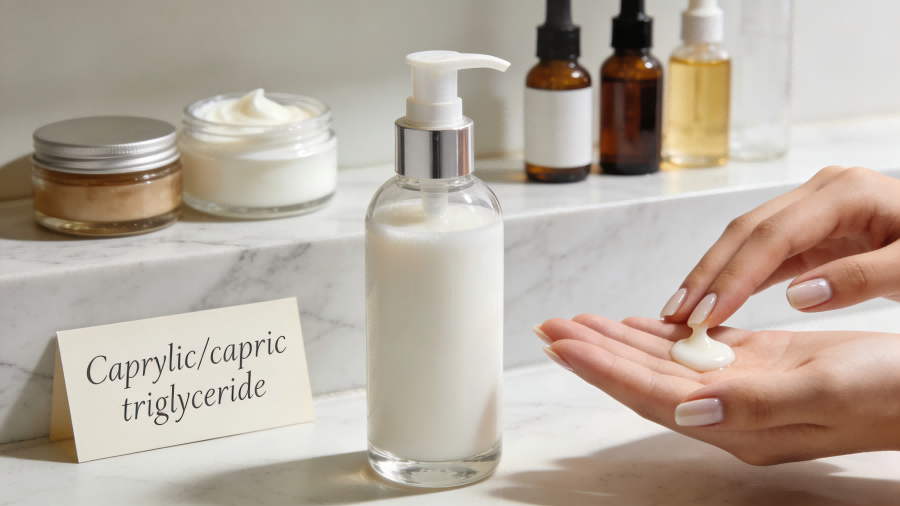
The Verdict: Is It the Ultimate Moisturizer for Sensitive Skin?
Caprylic/Capric Triglyceride checks nearly every box for sensitive skin moisturization: it is gentle, non-greasy, barrier-supporting, and versatile. Backed by rigorous research—from CIR safety evaluations to in vivo studies on TEWL reduction—it addresses the most pressing pain points in sensitive skin formulations . While no single ingredient is perfect, its safety profile and multifunctional benefits make it a top contender for the title of "ultimate moisturizer" for reactive complexions.
- Name: Yuki
- E-mail: sales02@nahanutri.com
- WhatsApp:+8618066950297