
Ethylhexyl Glycerin: The Multifunctional Powerhouse in Modern Cosmetics
What Is Ethylhexyl Glycerin? – Science and Core Properties
| Ethylhexyl glycerin, also known by its IUPAC name 3-((2-ethylhexyl)oxy)-1,2-propanediol and synonyms like octoxyglycerin, is a synthetic but naturally-inspired glyceryl ether. It is chemically classified as a diether of glycerin, produced through a controlled reaction between 2-ethylhexyl glycidyl ether and acetone, followed by acid hydrolysis, neutralization, and molecular distillation. A study published in the journal Applied Chemical Industry detailed the optimal synthesis conditions: a molar ratio of 2-ethylhexyl glycidyl ether to acetone of 1:6, catalyzed by boron trifluoride ether (1:40 molar ratio relative to the glycidyl ether), reaction temperature of 20℃ for 3 hours, and hydrolysis at 50℃ for 3 hours. Under these parameters, the ingredient achieves a yield exceeding 80% and a purity level of over 99% – critical for ensuring cosmetic safety and efficacy . | 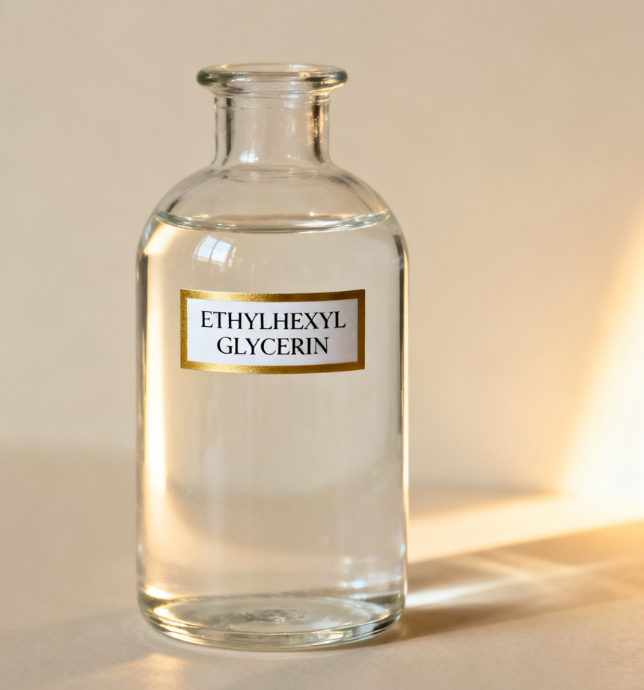 |
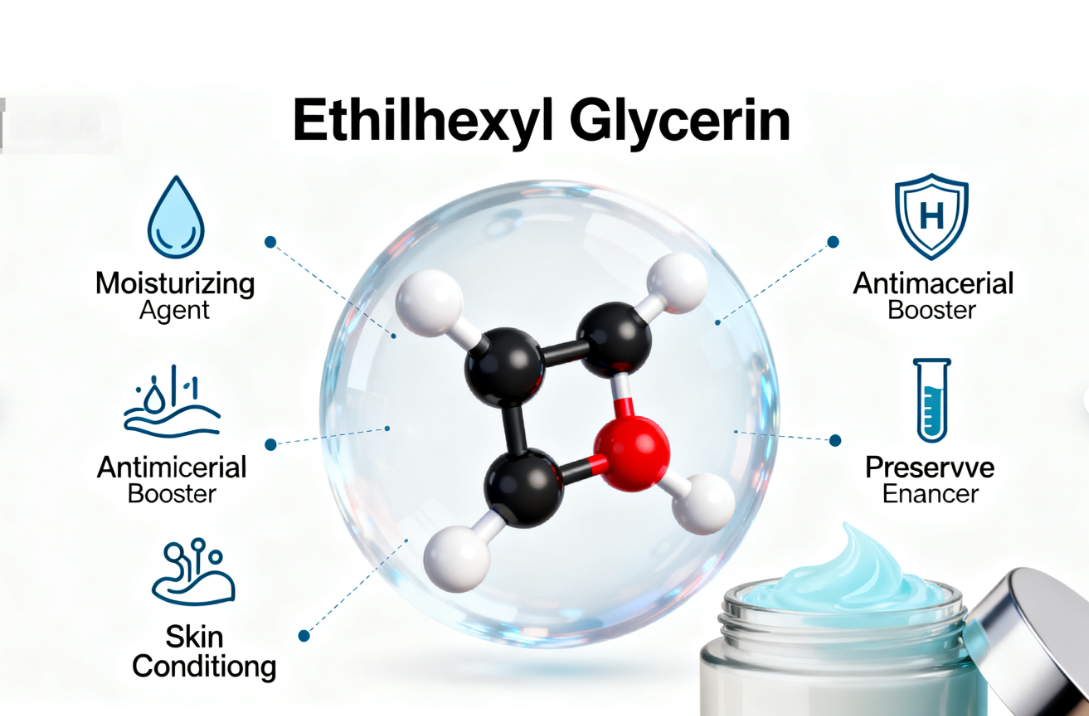
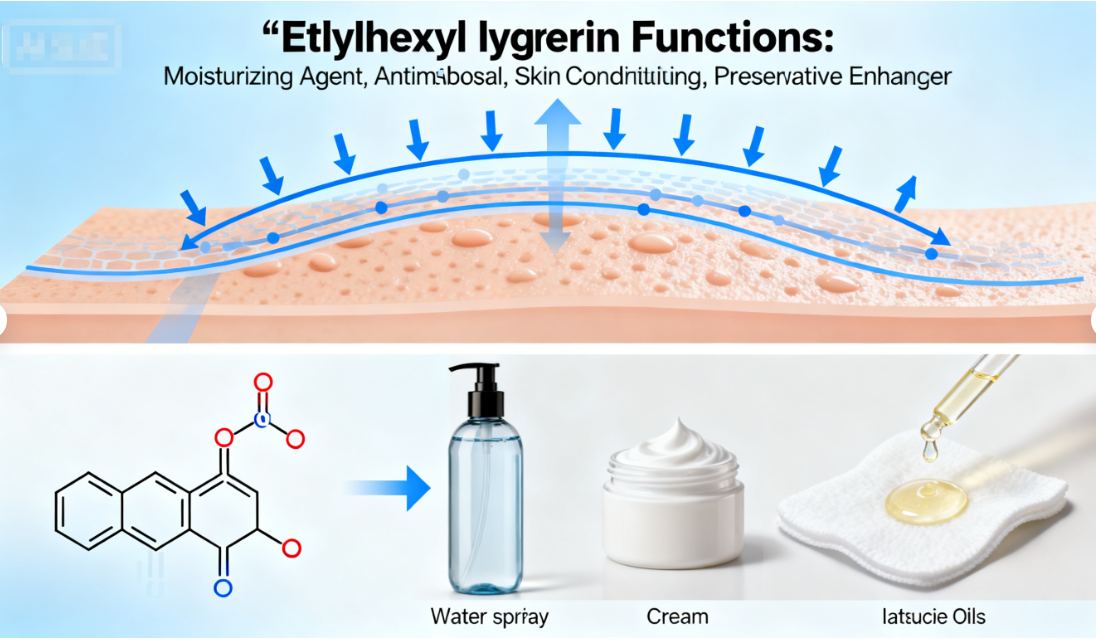
In its pure form, ethylhexyl glycerin is a clear, odorless liquid that integrates seamlessly into both water-based and oil-based formulations. Its molecular structure combines a hydrophilic glycerin backbone with a lipophilic 2-ethylhexyl chain, granting it amphiphilic properties that make it a versatile asset for formulators. Unlike single-function ingredients, ethylhexyl glycerin delivers three core benefits: preservative boosting, skin conditioning, and moisture retention – a trifecta that has solidified its place in modern cosmetics .
In Which Cosmetic Products Is Ethylhexyl Glycerin Used?
Ethylhexyl glycerin’s versatility makes it suitable for nearly all cosmetic and personal care categories:
- skincare: Moisturizers, serums, cleansers, toners, and sunscreens (enhances SPF stability and skin feel) .
- Hair Care: Shampoos, conditioners, hair masks, and styling products (adds hydration and extends shelf life) .
- Color Cosmetics: Foundations, concealers, lipsticks, and eye shadows (improves texture and prevents microbial growth) .
- Personal Hygiene: Body washes, lotions, and after-shave products (gentle enough for post-shave skin) .
- Pharmaceuticals: Some topical medications (enhances stability and preserves active ingredients) .
Its compatibility with both water-based and oil-based formulations makes it a favorite among formulators seeking universal ingredients .
Ethylhexyl Glycerin Market Trends – Growth Drivers and Future Outlook
The global ethylhexyl glycerin market is experiencing robust growth, driven by shifting consumer preferences, regulatory changes, and technological innovations. According to industry reports, the market size reached approximately USD 276.95 million in 2025, up from USD 12 million in 2024, and is projected to grow at a compound annual growth rate (CAGR) of 4.45% to reach USD 375.60 million by 2032 . This exponential growth is fueled by four key factors:
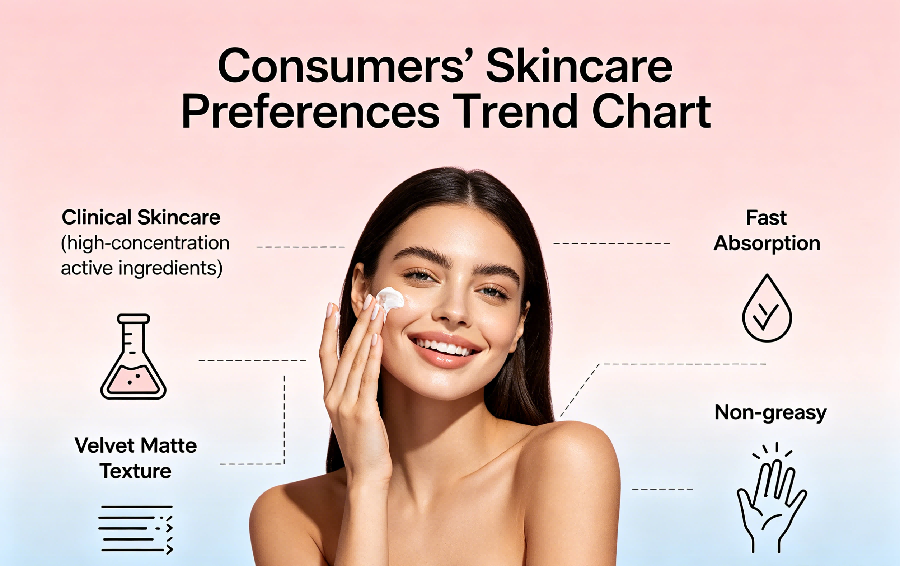
- Clean Beauty and “Preservative-Free” Formulation Trends
Consumers are increasingly avoiding synthetic preservatives like parabens and formaldehyde donors, driving demand for milder, multifunctional alternatives. Ethylhexyl glycerin’s ability to boost natural preservatives or reduce preservative concentrations aligns with the “clean label” movement . Brands are leveraging it to create “preservative-free” or “low-preservative” products – a major selling point in the premium skincare segment. A 2025 market analysis by Stats N Data found that 68% of new cosmetic launches in North America and Europe included ethylhexyl glycerin, citing consumer demand for safe, transparent ingredients .
- Regulatory Scrutiny of Traditional Preservatives
Stringent regulations on parabens, phenoxyethanol, and isothiazolinones in major markets (EU, US, China) have pushed formulators to adopt compliant alternatives. The EU’s Classification, Labelling and Packaging (CLP) Regulation and China’s updated cosmetic ingredient standards have endorsed ethylhexyl glycerin as a safe preservative option . Recent regulatory developments have also expanded its approved concentration thresholds, giving formulators greater flexibility to optimize microbial stability . This regulatory support has accelerated its adoption by multinational brands seeking global market access.
- Technological Innovations in Formulation
Advancements like microencapsulation and synergistic ingredient pairing have unlocked new applications for ethylhexyl glycerin. Microencapsulation technology allows for controlled release of the ingredient, enhancing its preservative efficacy and extending product shelf life . Additionally, research into its synergy with other multifunctional ingredients (e.g., caprylyl glycol, 1,2-hexanediol) has led to the development of hybrid preservation systems that meet the demands of both clean beauty and high-performance cosmetics . These innovations are particularly valuable in emerging categories like CBD-infused skincare and probiotic cosmetics, where ingredient compatibility and stability are critical .
- Rising Demand in Emerging Markets
Asia-Pacific and Latin America are emerging as key growth markets for ethylhexyl glycerin, driven by increasing disposable income, growing beauty consciousness, and expanding cosmetic manufacturing sectors. China, in particular, has seen a surge in demand following the 2024 China Cosmetic Ingredient White Paper’s endorsement of ethylhexyl glycerin as a low-sensitivity preservative . Local manufacturers are investing in production facilities to meet regional demand, reducing supply chain costs and expanding market reach .
Challenges and Opportunities
While the market outlook is positive, challenges remain, including fluctuating raw material costs and the need for further long-term safety research . However, these challenges are outweighed by opportunities:
- Sustainable Production: Brands are investing in eco-friendly synthesis methods to reduce the carbon footprint of ethylhexyl glycerin production, aligning with global sustainability goals.
- Specialized Formulations: Demand for ethylhexyl glycerin in sensitive skin, baby care, and medical-grade cosmetics is growing, as its safety profile makes it suitable for these high-regulation categories .
- Consumer Education: As ingredient transparency becomes a priority, brands are highlighting ethylhexyl glycerin on product labels and in marketing materials, increasing consumer awareness and preference .
Conclusion: Why Ethylhexyl Glycerin Is Indispensable in Modern Cosmetics
Ethylhexyl glycerin’s unique combination of preservative synergy, skin conditioning, and safety has made it a cornerstone of modern cosmetic formulations. Backed by rigorous research – from synthesis optimization to microbial challenge tests – it offers formulators a versatile, compliant, and consumer-friendly alternative to traditional preservatives. As the beauty industry continues to prioritize clean, effective, and sustainable ingredients, ethylhexyl glycerin’s market growth trajectory underscores its enduring relevance.
For consumers, understanding ethylhexyl glycerin means recognizing a ingredient that delivers on both safety and performance – a rare balance in the world of cosmetics. For brands and formulators, it represents a strategic asset that aligns with regulatory requirements, consumer demands, and future innovation trends. As research continues to uncover new applications and synergies, ethylhexyl glycerin is poised to remain a key player in the cosmetics industry for years to come.
| Contact
| Lydia You| Sales Representative at aogubio With in-depth expertise in cosmetic ingredients, I master their properties, efficacy and compliance standards. I excel at delivering highly tailored ingredient solutions based on customer needs, supporting product innovation and implementation. |